
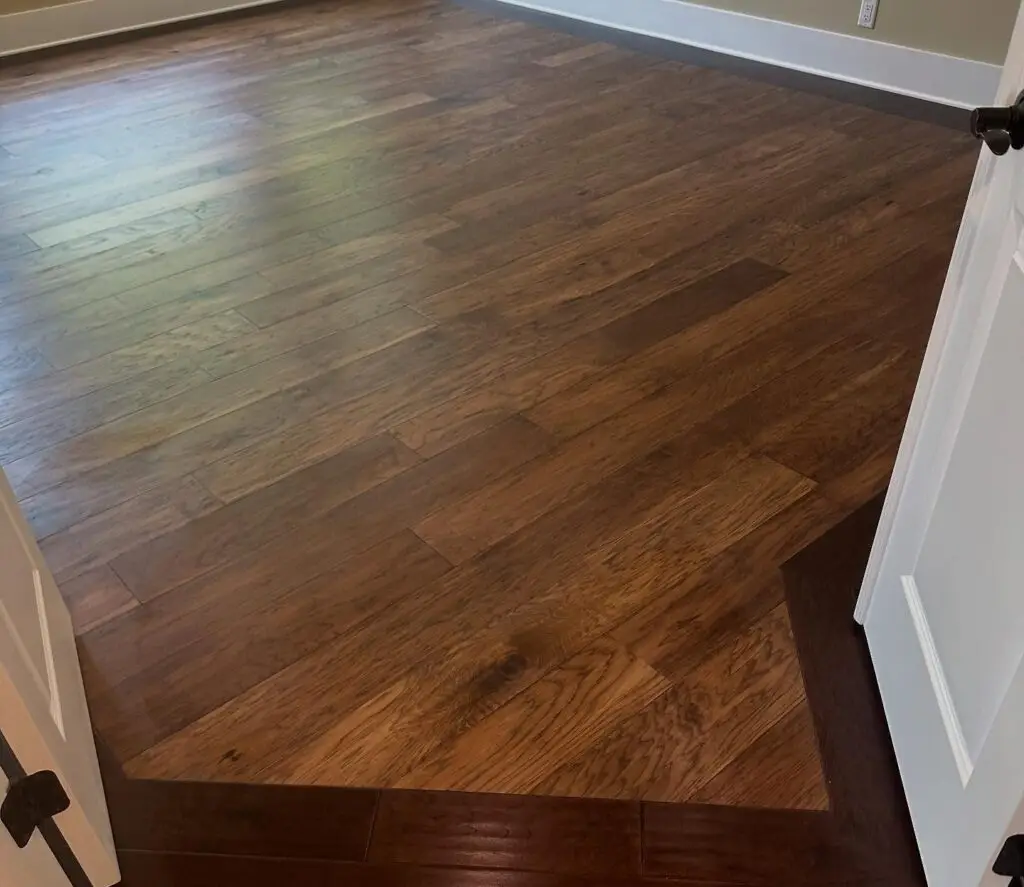
When considering a flooring upgrade, homeowners often look for ways to save time and effort. The idea of installing new flooring directly over existing carpet might seem like an appealing shortcut, especially with the popularity of click-lock laminate. However, when it comes to the question: Can you install laminate flooring over carpet? the answer is a resounding no for almost all scenarios. While the thought of skipping carpet demolition is tempting, doing so can lead to significant problems that undermine your new floor’s integrity and lifespan.
Why it’s not recommended
Installing laminate flooring directly over carpet is a bad idea for several crucial reasons that directly impact the performance and longevity of your new floor:
- Lack of Stability: Laminate flooring, especially floating laminate, requires an absolutely rigid and stable subfloor. Carpet, by its very nature, is soft, plush, and designed to compress. Installing laminate over it creates an unstable, spongy surface that will cause the laminate planks to flex, separate, and potentially break under normal foot traffic.
- Warranty Void: Nearly all laminate flooring manufacturers explicitly state in their warranties that the product must be installed over a rigid, flat, and structurally sound subfloor. Installing over carpet will almost certainly void your warranty, leaving you without recourse if problems arise.
- Moisture and Mold Risk: Carpet can trap moisture, especially in humid climates like Florida and Georgia. Laying a new floor over existing carpet without proper ventilation creates a sealed environment where moisture can accumulate, leading to mildew, mold growth, and unpleasant odors, which can then affect the laminate and the indoor air quality of your home.
- Uneven Surface & Telegraphing: The unevenness of carpet, its padding, and the tack strips will “telegraph” through the laminate over time. This means you’ll see bumps, dips, and lines in your new floor, ruining its aesthetic and making it appear poorly installed.
- Damage to Laminate: The constant flexing and movement will put undue stress on the laminate’s click-lock mechanisms, causing them to weaken, gap, and eventually break.
- Subfloor Issues Go Unnoticed: Keeping the carpet means you can’t properly inspect the underlying subfloor for moisture issues, damage, or unevenness, which could cause problems down the line regardless of your new top layer.
Exceptions: Low-pile carpet in special cases
While generally not recommended, there are very rare and specific circumstances where installing a rigid core flooring might be considered over an extremely low-pile, industrial-grade carpet (like certain commercial-grade carpet tiles, or very thin, dense carpet without significant padding).
- Key Considerations for “Exceptions”:
- Extremely Thin/Dense Carpet: The carpet must have almost no pile and be very dense, offering minimal compression.
- No Padding: There should be no separate carpet padding underneath.
- Rigid Core Flooring: Only a very rigid core vinyl plank (like SPC – Stone Plastic Composite) might stand a chance, as it is less flexible than traditional laminate or WPC vinyl.
- Still Not Ideal: Even in these rare cases, it’s a compromise. You still run risks of moisture issues and warranty voidance.
- Professional Consultation is Key: If you’re even considering this, consult with a seasoned flooring professional who can assess your specific situation and provide guidance – but expect them to advise against it.
For the vast majority of residential carpet scenarios, installing laminate over it is simply not advisable.
What to do instead: Removing or leveling
The best and safest practice is always to remove the existing carpet and prepare the subfloor properly.
1. Carpet removal:
- Clear the Room: Remove all furniture and any existing baseboards or quarter-round.
- Cut and Roll: Use a utility knife to cut the carpet into manageable strips (about 2-3 feet wide). Roll up the strips, starting from one corner.
- Remove Padding: Peel back and remove the carpet padding.
- Remove Tack Strips: Carefully pry up the tack strips (the wooden strips with sharp tacks that held the carpet) from the perimeter of the room using a pry bar.
- Pull Staples/Nails: Remove any remaining staples or nails from the subfloor.
- Clean Up: Thoroughly vacuum the subfloor to remove all dust and debris.
2. Subfloor inspection & preparation:
- Inspect: Check the subfloor for any damage, loose boards, or excessive squeaks. Repair or secure any issues.
- Leveling: This is critical for laminate. Use a long straightedge or level to check for high spots and low spots.
- High Spots: Sand down wooden high spots or grind down concrete high spots.
- Low Spots: Fill low spots with a suitable subfloor leveling compound or patching compound. For concrete slabs common in Florida and Georgia, a self-leveling compound might be necessary for significant unevenness.
- The subfloor should be flat within 1/8 inch over 6 feet.
- Moisture Test: If installing over a concrete slab (very common in FL/GA homes), conduct a moisture test (e.g., calcium chloride or RH test) to ensure the slab’s moisture vapor emission rate is within the laminate manufacturer’s specifications. High humidity is a common issue in these regions.
How to prep the subfloor after carpet removal
Once the carpet is gone and the subfloor is clean and level, you’ll need to prepare it for laminate.
- Vacuum Thoroughly: Use a powerful shop vac or household vacuum to ensure no dust, debris, or small particles remain.
- Install Underlayment:
- Laminate flooring requires a specific underlayment. This layer provides:
- Moisture Barrier: Crucial, especially over concrete slabs in humid climates like Florida and Georgia, to prevent moisture from wicking up and damaging the laminate. Many underlayments have integrated vapor barriers.
- Sound Dampening: Reduces the hollow sound often associated with laminate.
- Minor Imperfection Masking: Can help smooth out very minor subfloor imperfections.
- Comfort: Adds a slight cushion underfoot.
- Roll out the underlayment evenly across the subfloor, taping seams according to the manufacturer’s instructions.
- Laminate flooring requires a specific underlayment. This layer provides:
Better alternatives for quick flooring upgrades
If avoiding demolition is your primary goal, there are other flooring types that are designed to be installed over existing hard surfaces, including tile, much more successfully than laminate over carpet.
- Luxury Vinyl Plank (LVP) / Stone Plastic Composite (SPC) Flooring:
- Ideal for: Installing over existing hard surfaces like tile. Many LVP products are rigid enough to bridge minor grout lines and irregularities, especially SPC (Stone Plastic Composite) core versions.
- Benefits: 100% waterproof (unlike traditional laminate), highly durable, and excellent for homes in humid climates.
- Engineered Hardwood (Floating Installation):
- Some engineered hardwood products can be installed as a floating floor over a clean, flat, and stable hard surface (like existing tile, with proper underlayment).
- Benefits: Offers the look of real wood with greater dimensional stability than solid wood, making it suitable for a wider range of environments, including those with higher humidity.
- Area Rugs: If you simply want to change the look or add warmth without removing existing flooring, a new area rug is the quickest, most flexible, and least invasive solution.
While installing laminate over carpet might seem like a tempting shortcut, the long-term risks far outweigh any immediate benefits. For a beautiful, durable, and warranty-protected floor, proper subfloor preparation is always the best path forward.
Planning a flooring upgrade for your home in Northeast Florida or Georgia? Don’t risk costly mistakes! Santos Brothers Flooring provides expert guidance and professional installation for all types of flooring. Contact us today for a free consultation and let us help you achieve a beautiful, long-lasting floor!