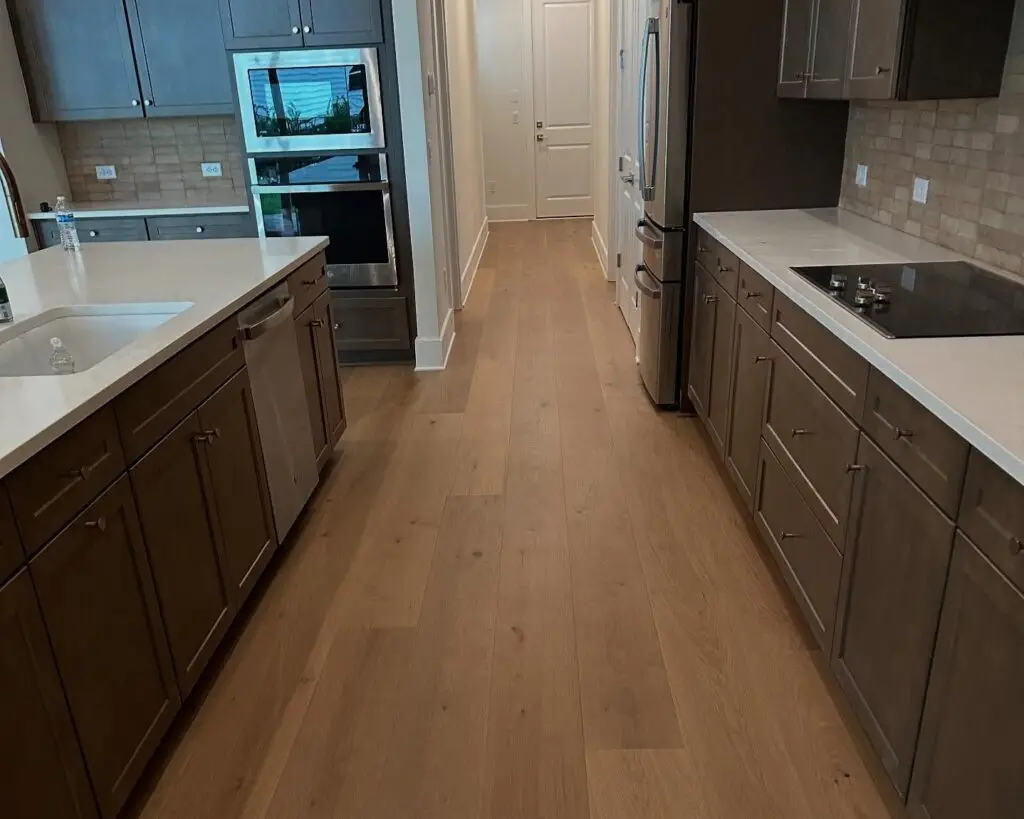
The kitchen is arguably the most demanding room in your home when it comes to flooring. It’s a high-traffic zone prone to spills, dropped utensils, and fluctuating temperatures. Choosing the right kitchen flooring means finding a balance between aesthetics, durability, and practicality. For homeowners in Northeast Florida and Georgia, where humidity can be a constant factor, selecting materials that can withstand moisture is paramount.
Key factors for kitchen flooring
Before diving into specific options, consider these critical factors:
Moisture resistance
Kitchens are prime locations for spills, leaks from dishwashers or sinks, and general humidity from cooking. Therefore, your flooring must be highly resistant to moisture to prevent warping, swelling, mold, or mildew. Materials that absorb water easily are a definite no-go.
Durability and maintenance
- Durability: The kitchen sees heavy foot traffic, and items are frequently dropped. Your floor needs to withstand scratches, dents, and impacts without showing significant wear.
- Ease of Cleaning: Food spills, grease, and dirt are daily occurrences. An ideal kitchen floor should be easy to wipe clean without requiring extensive maintenance or specialized products.
- Comfort Underfoot: You spend a lot of time standing in the kitchen, whether cooking or cleaning. A floor that offers some comfort and isn’t too hard can make a big difference for your feet and back.
Top kitchen flooring options
Based on the factors above, here are some of the best flooring choices for kitchens, along with their pros and cons:
Luxury vinyl (LVP/LVT)
Luxury Vinyl Plank (LVP) and Luxury Vinyl Tile (LVT) are engineered flooring options that beautifully mimic the look of natural wood or stone. They are incredibly popular for kitchens due to their practical advantages.
- Pros:
- 100% Waterproof: Many LVP/LVT products, especially those with SPC (Stone Plastic Composite) or WPC (Wood Plastic Composite) cores, are completely waterproof, making them ideal for kitchens and highly resistant to spills and humidity. This is a huge advantage in Florida and Georgia homes.
- Highly Durable: They feature a tough wear layer that resists scratches, dents, and scuffs from daily kitchen activity, pets, and dropped items.
- Low Maintenance: Easy to clean with just a broom, vacuum, or damp mop. No special sealing or waxing required.
- Comfort Underfoot: Softer and warmer than tile, providing more comfort for long periods of standing.
- Affordable: Generally more budget-friendly than genuine hardwood or natural stone.
- Versatile Design: Available in a vast array of realistic wood grains, stone patterns, and colors.
- Cons:
- Can be susceptible to fading if exposed to direct, prolonged sunlight.
- While durable, extremely heavy or sharp objects can still dent or cut the surface.
- Lower-quality options may look less authentic.
Tile (Porcelain and Ceramic)
Tile has been a long-standing favorite for kitchens due to its robust nature. Porcelain is generally denser and more durable than ceramic.
- Pros:
- Excellent Water Resistance: Both porcelain and ceramic tiles are highly water-resistant, and porcelain, in particular, has a very low water absorption rate (below 0.5%), making it virtually waterproof.
- Extremely Durable: Highly resistant to scratches, dents, and heavy impacts. Great for high-traffic areas.
- Easy to Clean: Spills wipe up effortlessly, and the surface doesn’t absorb odors or stains.
- Versatile Design: Available in an endless array of colors, sizes, patterns, and textures, including realistic wood or stone looks.
- Cool Underfoot: A benefit in hot climates like Florida.
- Cons:
- Hard Underfoot: Can be uncomfortable to stand on for long periods and offers no give for dropped items (which often break).
- Grout Lines: Grout can stain over time and requires periodic sealing and cleaning to maintain appearance and prevent mildew.
- Can Be Cold: May feel cold underfoot, especially in cooler months (though less of an issue in Florida/Georgia).
- Slippery: Some glazed or highly polished tiles can become very slippery when wet.
- Difficult Installation: Requires professional installation due to the need for precise cuts and proper subfloor preparation.
Engineered wood
If you love the classic look and feel of real wood, engineered wood is a much better choice for kitchens than solid hardwood, especially in humid climates.
- Pros:
- Real Wood Aesthetic: Offers the warmth, beauty, and authenticity of real wood.
- Dimensional Stability: Engineered wood’s layered construction makes it more stable and less prone to warping or gapping due to humidity fluctuations compared to solid hardwood. This is key for homes in Northeast Florida and Georgia.
- Can Be Refinished: Depending on the thickness of the top veneer, engineered wood can be sanded and refinished at least once, extending its lifespan.
- Adds Value: Real wood flooring significantly enhances home value.
- Cons:
- Not Waterproof: While more moisture-resistant than solid wood, it is not waterproof. Standing water or prolonged spills can still cause damage. Spills must be wiped immediately.
- Susceptible to Scratches/Dents: Like all wood, it can scratch or dent from heavy objects or pet claws.
- Requires More Care: Requires specific wood floor cleaners and needs to be protected from excessive moisture.
- Cost: Generally more expensive than LVP or ceramic tile.
What to avoid in kitchen floors
Some flooring types are simply not well-suited for the kitchen environment due to their vulnerabilities:
- Solid Hardwood: Highly susceptible to warping, cupping, and gapping from moisture and humidity, making it a risky choice for kitchens, especially in humid climates.
- Laminate (Traditional): While some newer laminate products offer water resistance, traditional laminate has an HDF (high-density fiberboard) core that will swell and delaminate if exposed to standing water, making it a poor choice for kitchens.
- Carpet: Absolutely not for kitchens. It absorbs spills, traps food particles, and becomes a breeding ground for bacteria, mold, and odors. It’s also incredibly difficult to clean.
- Unsealed Natural Stone: While beautiful, many natural stones (like marble, travertine, or limestone) are porous and can easily stain or etch from acidic foods and liquids if not properly sealed and maintained. They also need frequent resealing.
Choosing the right flooring for your lifestyle
The “best” kitchen flooring ultimately depends on your specific needs, budget, and lifestyle:
- For Busy Households (Kids, Pets): LVP/LVT is often the top choice due to its extreme durability, waterproof nature, and easy maintenance. Porcelain tile is also an excellent option if you don’t mind the hardness.
- For the Serious Cook: Consider LVP/LVT or engineered wood for comfort underfoot during long hours of cooking. If choosing tile, invest in anti-fatigue mats for work zones.
- For Humid Climates (Northeast Florida & Georgia): LVP/LVT and porcelain tile are the most resilient against moisture. Engineered wood is a viable option if humidity is consistently controlled.
- For Resale Value: Engineered wood and high-quality porcelain tile can significantly boost your home’s appeal and value.
- For Budget-Conscious Renovations: LVP offers excellent performance and aesthetics at a more accessible price point.
Making the right choice for your kitchen floor is a long-term investment in your home’s functionality and beauty. Carefully weigh these pros and cons to select a floor that truly suits your family’s needs.
Ready to upgrade your kitchen flooring in Northeast Florida or Georgia? Santos Brothers Flooring offers a wide selection of durable and stylish options, from waterproof luxury vinyl to beautiful tile and engineered wood. Contact us today for a personalized consultation to find the perfect flooring for your kitchen and lifestyle!