
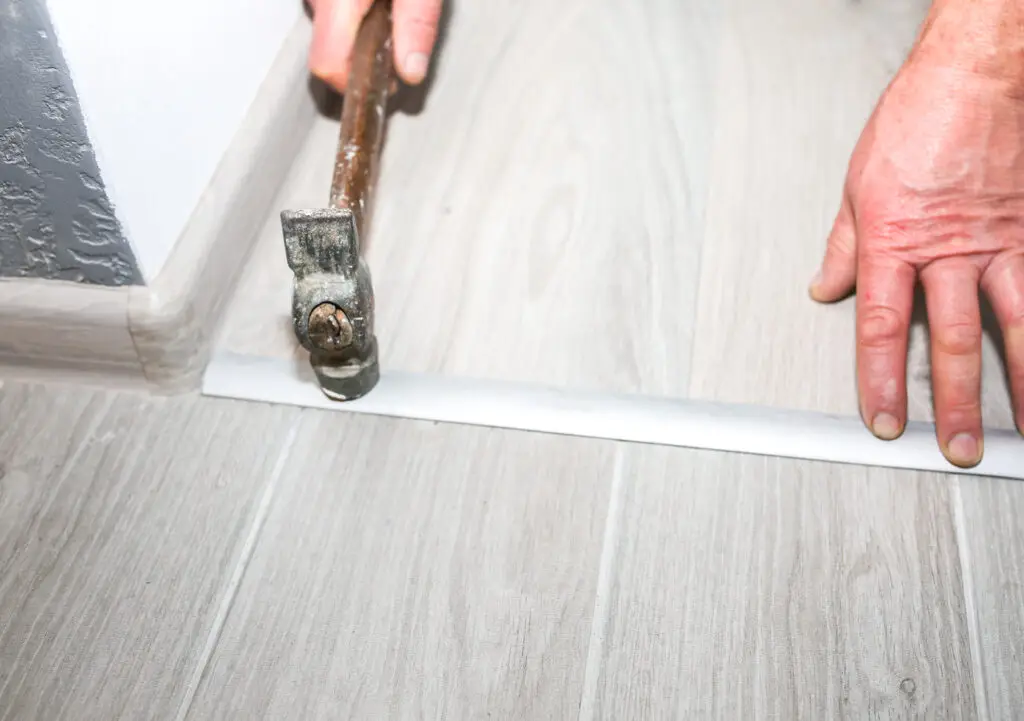
Floor transition strips, also known as floor moldings, are a crucial element in any home with multiple types of flooring. They are not just a decorative detail; they serve a vital purpose in ensuring a seamless and safe transition between different rooms and surfaces. This guide will help you understand what floor transition strips are, the most common types, and why professional installation is the best choice for a flawless finish.
What are floor transition strips and why they’re Needed
A floor transition strip is a piece of molding designed to connect two different flooring surfaces. They are most commonly used in doorways or where one room’s flooring material changes to another, such as where hardwood meets tile or carpet meets luxury vinyl.
Their primary functions include:
- Hiding the Expansion Gap: All types of flooring, especially hardwood and laminate, need an expansion gap to allow for natural movement due to changes in humidity and temperature. A transition strip covers this gap, creating a clean, finished look.
- Preventing Tripping Hazards: Transition strips create a smooth ramp or seam between floors of different heights, reducing the risk of trips and falls.
- Protecting Flooring Edges: They protect the edges of your flooring from damage and wear, especially in high-traffic areas.
Common types of transition strips
Choosing the right type of transition strip depends on the type of flooring you have and the height difference between them.
T-Molding
T-molding is one of the most common transition strips. It is shaped like a “T” and is used to connect two hard flooring surfaces of the same height. This includes transitions between laminate, hardwood, tile, or stone. The horizontal part of the “T” sits over the top of the two floors, providing a smooth and clean seam.
Reducer strips
A reducer strip is used when two flooring surfaces have a different height. It creates a gentle ramp from a higher floor (like a thick plank of engineered hardwood) down to a lower floor (like vinyl or concrete). This type of strip is essential for safety and ease of movement, preventing a sharp, uncomfortable edge.
Thresholds and end caps
- Thresholds are typically used in doorways to transition between two floors. They are generally wider and more substantial than other strips, providing a clean break at the entrance to a room.
- End Caps (also called baby thresholds) are used to finish the edge of a floor against a vertical surface, such as a sliding door track, a fireplace hearth, or an exterior door. They provide a polished edge where the flooring cannot continue.
Best materials for transition strips
Transition strips are available in a variety of materials, allowing for a seamless match with your existing flooring.
- Wood: Often used with hardwood and engineered wood floors, these can be stained or finished to perfectly match your planks.
- Metal: Aluminum, brass, and stainless steel strips provide a modern, sleek look and are highly durable, especially in commercial or high-traffic settings.
- Laminate/Vinyl: These strips are designed to match the specific color and pattern of your laminate or vinyl flooring, creating a nearly invisible transition.
How to install transition strips properly
While it may seem straightforward, a professional installation is key to ensuring your transition strips are secure, safe, and look flawless. The process involves:
- Precise Measurement: The strip must be cut to the exact width of the doorway or space.
- Proper Cutting: The cut must be clean and straight to prevent a jagged edge.
- Secure Fastening: Depending on the type, the strip is either nailed, screwed, or glued into place. This must be done carefully to prevent damage to the subfloor or the new flooring.
A professional installation guarantees that the strip is aligned perfectly, fastened securely, and provides the smooth transition your home deserves.
Don’t let unsightly gaps or tripping hazards detract from your beautiful new floors. Contact Santos Brothers Flooring today for a free consultation and professional installation of floor transition strips.