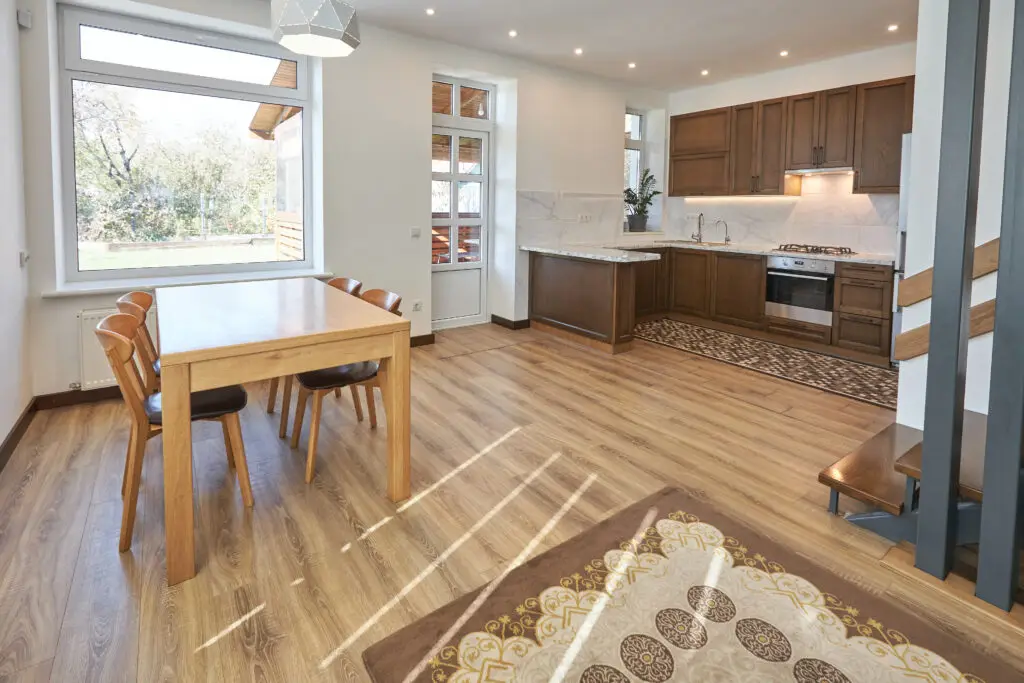
The kitchen is the heart of the home, a space for cooking, gathering, and daily life. Because it endures spills, heavy foot traffic, and dropped dishes, the flooring you choose is one of the most important decisions you’ll make. The best kitchen floor is a perfect blend of style, durability, and practicality. Here’s a comprehensive guide to help you choose the right one for your home.
Key Factors in Choosing Kitchen Flooring
Before you fall in love with a particular material, it’s essential to consider a few key factors that will impact your long-term satisfaction.
Water and stain resistance
Kitchens are high-risk zones for spills. From a dropped glass of water to a splash of tomato sauce, your floor needs to be able to handle moisture and stains without damage. Look for materials that are non-porous or have a strong protective layer.
Durability under heavy traffic
The kitchen is often the busiest room in the house. The flooring must be able to withstand constant foot traffic, as well as the weight of heavy appliances and furniture. A durable floor will resist scratches, dents, and scuffs, keeping your kitchen looking new for years.
Easy cleaning and maintenance
No one wants to spend hours scrubbing the floor after a meal. The ideal kitchen floor is easy to sweep, mop, and spot clean. Consider how the material and its grout lines will affect your cleaning routine.
Best Kitchen Flooring Materials
Several flooring materials are popular for kitchens, each with its own set of pros and cons.
Porcelain and ceramic tile
Porcelain and ceramic tile are classic kitchen choices and for good reason. They are extremely durable, non-porous, and highly resistant to water and stains. Tiles are also easy to clean and can be used to create endless design patterns, from classic to contemporary. They can be hard underfoot, and the grout lines can require regular cleaning, but their longevity and versatility are hard to beat.
Luxury vinyl plank (LVP)
Luxury vinyl plank (LVP) has become an incredibly popular option. It’s 100% waterproof, highly durable, and soft underfoot. LVP is designed to mimic the look of natural wood or stone with astonishing realism, offering a stylish solution at a more affordable price point. Its click-and-lock installation system makes it a great DIY-friendly option, and it’s very easy to clean.
Engineered hardwood
If you love the look of hardwood but are concerned about moisture, engineered hardwood is a viable alternative. Unlike solid hardwood, engineered planks have a plywood core that makes them more stable and less prone to warping from humidity. While they offer a stunning, natural look, they are not completely waterproof and can still be susceptible to damage from large spills or floods. They are also more expensive than LVP or tile.
Laminate flooring
Laminate flooring offers the look of wood or tile at an economical price. It consists of a high-density fiberboard core topped with a photographic layer and a clear protective wear layer. Modern laminates are more water-resistant than ever, but they are still not waterproof. For a kitchen, you’ll need to choose a product specifically rated for high-moisture areas. It’s a great option for those on a tight budget who still want a stylish, low-maintenance floor.
Budget-Friendly vs Premium Choices
Your budget will play a significant role in your final decision, but you can find beautiful options at every price point.
Affordable but durable options
For a balance of cost-effectiveness and durability, LVP and laminate are excellent choices. They provide a high-end look without the premium price tag. You can also find high-quality ceramic tile for an affordable, long-lasting floor.
High-end designer picks
If budget isn’t a primary concern, porcelain tile and engineered hardwood offer superior quality and design. You can select unique large-format tiles, intricate patterns, or exotic wood finishes that will add significant value to your home.
FAQs
What’s the most durable kitchen floor?
Porcelain and ceramic tile are generally considered the most durable options for a kitchen. Their hard surface and resistance to water and stains make them ideal for handling heavy use.
Are wood floors good for kitchens?
Solid wood floors are generally not recommended for kitchens due to their susceptibility to water damage. However, engineered hardwood can be a good option if you love the look of wood and are committed to quick cleanup of spills. For a worry-free alternative, consider wood-look LVP or wood-look tile, which offer the aesthetic without the maintenance concerns.
Ready to find the perfect flooring for your kitchen? Explore our full range of kitchen-ready flooring options to find the perfect blend of style and function for your home.