
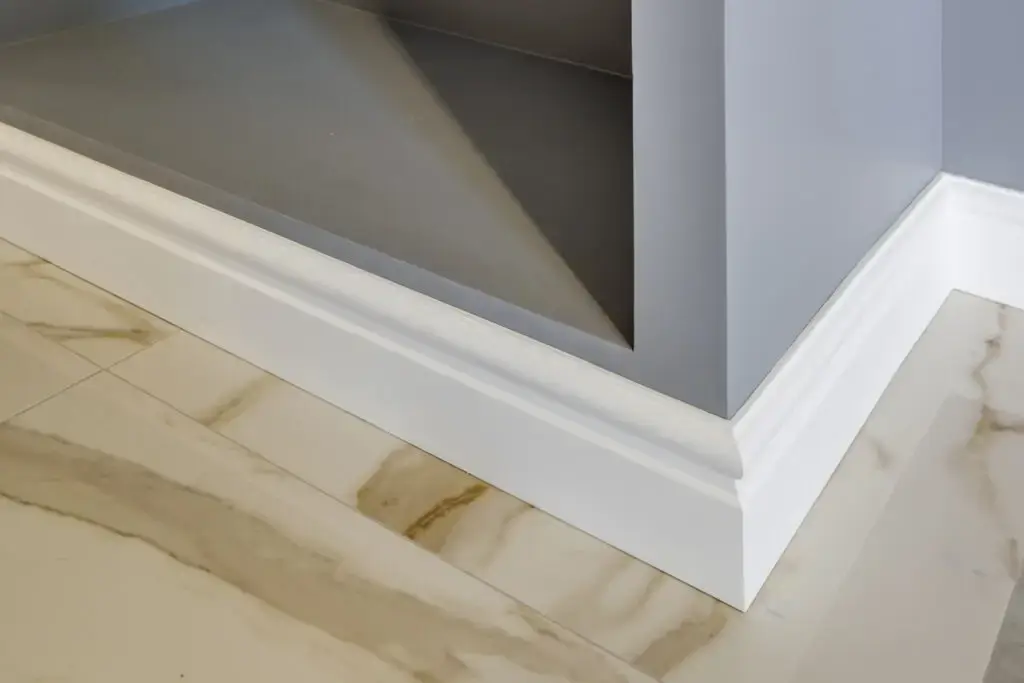
When you’re installing new flooring, the final touch is often the trim that covers the gap between the floor and the baseboards. The two most common options for this are shoe molding and quarter round. While they serve the same purpose, they have distinct shapes, appearances, and ideal applications. Understanding the difference can help you achieve a polished, professional look for your new floors.
What Is Shoe Molding?
Shoe molding, or “base shoe,” is a slender, flexible piece of trim that is taller than it is wide. Its design makes it an elegant, discreet choice for finishing a room.
Typical dimensions
Shoe molding is typically about 3/4″ tall and 1/2″ wide. Its sleek, elongated profile is one of its most defining characteristics, allowing it to blend seamlessly with the baseboard and flooring.
Common uses
Because of its shape, shoe molding is excellent for covering the expansion gap that’s left around the perimeter of floating floors like laminate or luxury vinyl plank (LVP). Its low profile makes it a great choice for hiding imperfections where the flooring meets the wall. It’s often preferred in modern or contemporary homes where a clean, minimal look is desired.
What Is Quarter Round?
Quarter round gets its name from its shape: it’s a perfect quarter of a circle. It’s a more traditional and robust option compared to shoe molding.
Shape and size
Quarter round is a trim piece with a symmetrical, quarter-circle profile. Its dimensions are typically 3/4″ by 3/4″, making it thicker and more pronounced than shoe molding.
Where it’s typically installed
Quarter round is a classic choice for covering the gap between the floor and the wall, just like shoe molding. Because it’s thicker, it’s often used when the gap is larger or more uneven. Its pronounced shape is a better aesthetic fit for traditional homes, especially those with classic, ornate baseboards.
Shoe Molding vs Quarter Round – Side by Side
While they perform a similar function, their differences in design and function are important to consider.
Aesthetic differences
- Shoe Molding: Offers a more delicate, subtle look. Its taller, thinner shape appears more refined and blends well with a variety of baseboard styles, from simple to more elaborate.
- Quarter Round: Presents a more rounded and prominent appearance. Its symmetrical curve can feel more robust and is a traditional pairing with hardwood floors and older-style baseboards.
Functional differences
- Shoe Molding: Its thinner profile can flex more easily, making it a better choice for walls that are slightly uneven. It requires less cutting and can be more forgiving during installation.
- Quarter Round: Due to its thicker profile, it can cover a wider gap. It provides a sturdier, more substantial finish, but its rigidity means it may not conform as well to minor wall irregularities.
Which One Should You Choose?
The choice between shoe molding and quarter round often comes down to the style of your home and the specific needs of your flooring.
For hardwood and LVP flooring
For a classic hardwood floor, a quarter round is often the go-to choice as it complements the substantial look of the wood. Its traditional profile matches well with the aesthetic. However, for a sleek, modern look with LVP, shoe molding is usually preferred for its cleaner, more discreet appearance.
For bathrooms and kitchens
In high-moisture areas like bathrooms and kitchens, the choice of molding can be functional as well as aesthetic. The material of the molding is just as important as its shape. Both profiles are available in materials like solid PVC or vinyl, which are fully waterproof and highly recommended for these rooms, regardless of which shape you prefer.
Whether you choose the sleek elegance of shoe molding or the classic charm of quarter round, the right choice will provide a flawless finish to your new floors.
Ready to start your flooring project? Find the perfect molding to complete your home’s new look.