
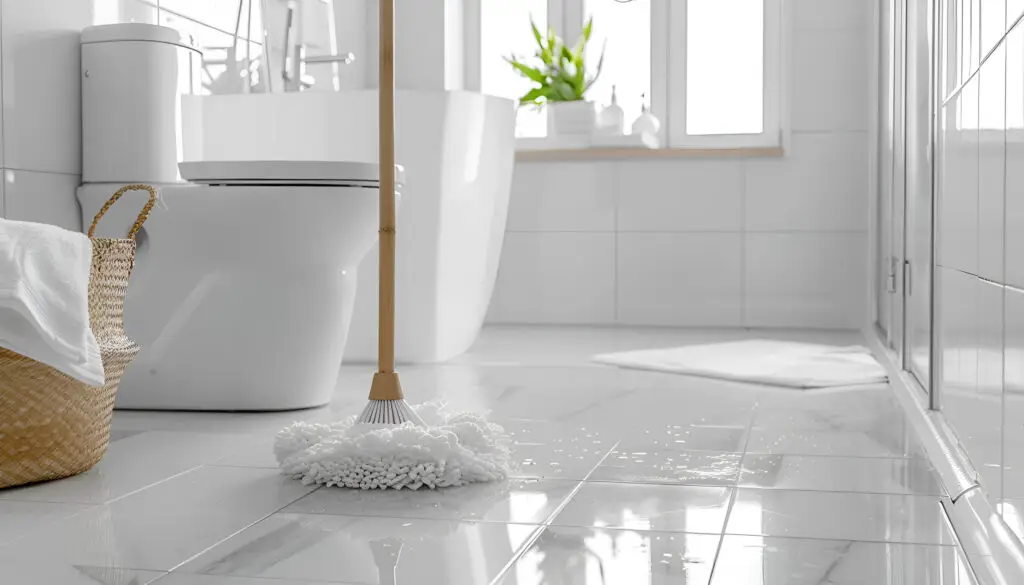
Bathroom flooring endures a unique combination of high humidity, standing water, soap scum, and everyday dirt. At Santos Brothers Flooring, we know that proper maintenance is essential not only for aesthetics but also for preserving the structural integrity and lifespan of your floors. This step-by-step guide covers the best cleaning practices for the most common bathroom floor types.
Why Proper Floor Cleaning Matters in Bathrooms
The bathroom environment is inherently challenging for any material, and cleaning mistakes can accelerate wear, dull the finish, and even void product warranties.
High Humidity and Moisture Promote Mold, Mildew, and Damage
Bathrooms are damp, warm environments—perfect breeding grounds for biological contaminants. If moisture is allowed to seep into grout lines, under seams, or into cracked surfaces, it can lead to:
- Mold and Mildew: Unsightly black or pink growth that can be difficult to remove and potentially harmful to air quality.
- Subfloor Damage: For vinyl, laminate, or wood, water infiltration can cause warping, swelling, and costly damage to the subfloor beneath.
- Staining: Hard water and soap residue can leave permanent stains on tile and stone surfaces if not cleaned regularly.
Different Flooring Materials Respond Differently to Water and Cleaners
The cleaner that works beautifully on a porcelain tile may destroy the finish on a laminate floor or degrade the sealant on natural stone. Understanding your specific material is the first step in effective cleaning. Harsh chemicals, particularly acids and ammonia, are often the culprits behind damaged finishes and compromised grout.
Cleaning Tile & Grout Floors
Ceramic and porcelain tile is durable, but the grout lines between the tiles require specialized care to prevent staining and deterioration.
Daily Sweeping or Vacuuming to Remove Grit
Start by removing dry debris. Small particles of grit, hair, and dirt can become abrasive underfoot, dulling the tile surface and embedding themselves into the porous grout. Use a soft-bristle broom, or a vacuum with a soft brush attachment, daily or every other day.
Use pH-Neutral Cleaner and Mop, Avoid Harsh Acids on Grout
For general cleaning, always use a pH-neutral cleaner specifically formulated for flooring.
- Mix the cleaner according to the manufacturer’s instructions.
- Use a damp (not soaking) mop or cloth to clean the floor.
- Mop in sections, working toward the door.
- Crucial Warning: Never use harsh, acidic cleaners (like vinegar or some commercial bathroom cleaners) on grout, especially if it is cement-based or sealed. Acids will slowly dissolve the cement and sealant, making the grout porous and highly susceptible to staining and decay.
Periodic Grout Sealing and Scrub with Brush for Build-Up
For embedded dirt and soap scum build-up, a deep clean is necessary:
- Apply a non-acidic, oxygenated grout cleaner to the lines.
- Use a small, stiff-bristled brush (like a toothbrush or a specialized grout brush) to scrub the dirty lines.
- Wipe clean and rinse thoroughly with clean water.
- Sealing: Once the grout is clean and dry (usually 24 hours), apply a quality grout sealant as part of your maintenance schedule to repel future moisture and stains.
Cleaning Vinyl & Luxury Vinyl Floors
Vinyl (including sheet vinyl) and Luxury Vinyl Plank/Tile (LVP/LVT) are excellent bathroom choices due to their water resistance. However, they require careful cleaning to protect the wear layer and the seams.
Use Damp Mop with Mild Soap and Warm Water
For routine cleaning, a mild, pH-neutral dish soap diluted in warm water is usually sufficient.
- Squeeze the mop head until it is just damp—it should never leave puddles.
- Mop the floor gently, focusing on removing surface dirt and scuff marks.
Avoid Soaking, Avoid Abrasive Scrubbers That Damage Surface
Excessive water is the biggest enemy of LVP/LVT. While the vinyl itself is waterproof, water can penetrate the seams between planks or tiles, reaching the subfloor over time.
- Avoid: Harsh chemical strippers, abrasive powders, steel wool, or hard-bristle brushes, as these can scratch, dull, and permanently damage the transparent protective wear layer of the vinyl.
Rinse and Dry Thoroughly to Prevent Water Infiltration at Seams
After cleaning with soap, wipe the entire floor again with a mop rinsed thoroughly in clean, plain water to remove all soap residue (which can attract more dirt). Finally, manually wipe the floor dry with a clean, soft cloth or towel to prevent any standing moisture from lingering on the seams.
Cleaning Laminate Floors in Bathrooms (if used)
Laminate flooring in a bathroom is highly discouraged by Santos Brothers Flooring due to its extreme vulnerability to moisture. If you have laminate, absolute water vigilance is required.
Clean with Barely Damp Cloth—Laminate Vulnerable to Water Seepage
Unlike vinyl, standard laminate core layers are often made of wood fiber (HDF) and will swell irreversibly if exposed to standing water.
- Use a cloth or sponge that is only barely damp (not wet) with a laminate-specific or pH-neutral cleaner.
- Spray the cleaner directly onto the cloth, not the floor.
Wipe Up Splashes Immediately, Ensure Proper Ventilation
The key to maintaining laminate in a bathroom is immediate mitigation.
- Wipe-Ups: Instantly dry any splashes around the tub, sink, or toilet. Do not let water sit on the surface for any amount of time.
- Ventilation: Use the bathroom fan during and after showers to reduce humidity.
Maintenance Tips to Make Floors Last Longer
Preventative care is often easier and less expensive than repair. Implement these practices to extend the life of your bathroom flooring.
Use Bath Mats at Entrances, Wipe Excess Water After Shower
Always place non-slip bath mats outside the shower and tub areas to absorb drips and splashes immediately. Regularly shake out or launder these mats, as they hold moisture. It is good practice to use a squeegee or towel to quickly wipe down obvious puddles after showering.
Maintain Ventilation and Humidity Control
Use the exhaust fan every time the shower or bath is used, and leave it running for at least 15–20 minutes afterward. This dramatically reduces the humidity level in the room, limiting the growth of mold and mildew on grout and stopping moisture from condensing on the floor surface.
Repair Chips or Cracks Promptly
If you notice any chips in tile or cracks in grout, or if a vinyl plank corner lifts, address it immediately. These damaged areas are direct pathways for water to reach the subfloor, leading to expensive, irreparable damage. Use appropriate caulk, grout, or repair kits to seal the breach.
FAQs
“What cleaner should I not use on bathroom floors?”
Avoid harsh acids, abrasive powders, and cleaners containing ammonia on nearly all bathroom floor types. Acids (like vinegar) degrade grout and can etch natural stone. Ammonia can dull the finish on vinyl and laminate. Always look for cleaners labeled “pH-neutral” or “safe for floors.”
“How often should I seal tile grout?”
The recommended frequency for sealing cement-based grout is every 1 to 3 years, depending on the quality of the sealant used and the amount of foot traffic and moisture exposure. A simple test is to drip a small amount of water on the grout; if it beads up, the sealant is working. If it soaks in, it’s time to reseal.
“Can steam mops be used on bathroom floors?”
Steam mops should be used with extreme caution and are generally discouraged for many bathroom floors.
- Tile & Grout: They can be effective, but the high heat can damage the grout sealant.
- Vinyl (LVP/LVT): The heat from steam can sometimes loosen the adhesive and cause the seams between planks to curl or lift.
- Laminate: Steam mops are absolutely forbidden for laminate floors as the steam rapidly infiltrates the vulnerable wood core, causing irreversible swelling.
Need Expert Advice or Professional Installation?
The lifespan of your bathroom floor begins with professional installation and ends with consistent, proper care. If you have questions about which products are safest for your current flooring, or if you’re ready to upgrade to a more durable, low-maintenance material, contact Santos Brothers Flooring today for a free consultation.