
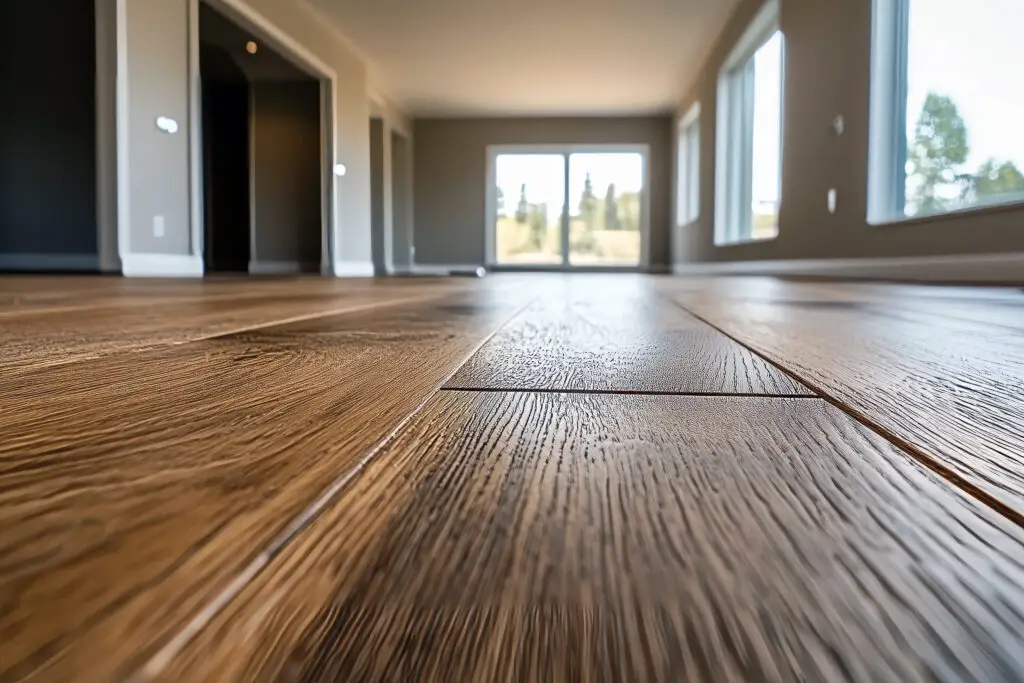
A common misconception is that engineered hardwood is a “disposable” floor. While it differs from solid wood, many high-quality engineered floors can be sanded and refinished to look brand new, provided they meet specific structural criteria.
Quick Answer: Yes, If the Veneer Layer Is Thick Enough
The ability to refinish depends entirely on the wear layer (the top veneer of real hardwood). Because sanding removes a thin layer of wood, the veneer must be thick enough to withstand the abrasive force of a floor sander without exposing the plywood or HDF core underneath.
How Many Times Can Engineered Wood Be Refinished?
The number of times you can sand a floor is determined by the initial thickness of the wear layer measured in millimeters (mm).
Veneer Thickness Guide
- 1mm or less: Cannot be refinished. Sanding will immediately destroy the veneer. These floors can only be “cleaned and recoated.”
- 2mm to 3mm: 1 Refinishing. Can typically handle one professional sanding and refinishing over its lifetime.
- 4mm to 6mm: 2–4 Refinishings. These are premium planks that perform similarly to solid hardwood, allowing for multiple color changes or surface repairs.
Signs Refinishing is Possible
- Deep Scratches: If the scratch doesn’t show the white or grey core material underneath, there is enough wood left to sand.
- Uniform Surface: No visible “delamination” (peeling) of the top layer.
- Professional Assessment: A flooring contractor can often remove a heat vent cover to see the side profile of the plank and measure the remaining wear layer.
When Refinishing Is Not Recommended
- Thin Wear Layers: Attempting to sand a 1mm veneer will result in “sand-throughs,” where the ugly plywood core is exposed.
- Structural Damage: If the floor is buckling, cupping, or has significant water damage, refinishing is a cosmetic fix for a structural problem.
- Hand-Scraped Textures: Sanding a hand-scraped or wire-brushed floor will remove the texture, turning it into a smooth floor.
Cost to Refinish Engineered Hardwood
Professional refinishing typically costs between $3.00 and $6.00 per square foot. This includes:
- Sanding off the old finish.
- Buffing the wood smooth.
- Applying a stain (optional).
- Applying 2–3 coats of protective polyurethane.
Alternatives to Refinishing
Screening and Recoating
If the wood isn’t damaged but the finish is dull or lightly scuffed, you can “screen” the floor. This involves lightly scuffing the existing topcoat (not the wood) and applying a fresh layer of polyurethane. This is cheaper and much faster than a full refinish.
Replacement Planks
Because engineered floors are often installed as individual units, a single damaged plank can sometimes be cut out and replaced with a “spare” from the original installation, avoiding the need to refinish the entire room.
FAQs
How do I know my veneer thickness?
Check your original purchase records or pull up a floor register (vent). Look at the edge of the plank; the top layer of real wood is distinct from the layered core below. Measure that top slice with a metric ruler.
Does refinishing damage the floor?
If done by a professional, no. However, DIY refinishing is risky because engineered wood has a limited “margin for error.” If you sand too deep in one spot, the floor is permanently ruined.
Is refinishing worth it?
If you have a high-quality floor with a 3mm+ wear layer, refinishing is significantly cheaper than a full tear-out and replacement. It also allows you to change the stain color to match modern trends.
Professional Refinishing Services
At Santos Brothers Flooring, we utilize dust-containment systems and specialized sanding equipment designed specifically for the thinner tolerances of engineered wood. We can help you determine exactly how much “life” is left in your floors and whether a screen-and-recoat or a full refinish is the best path forward.
Contact us today for a professional evaluation of your engineered hardwood floors!