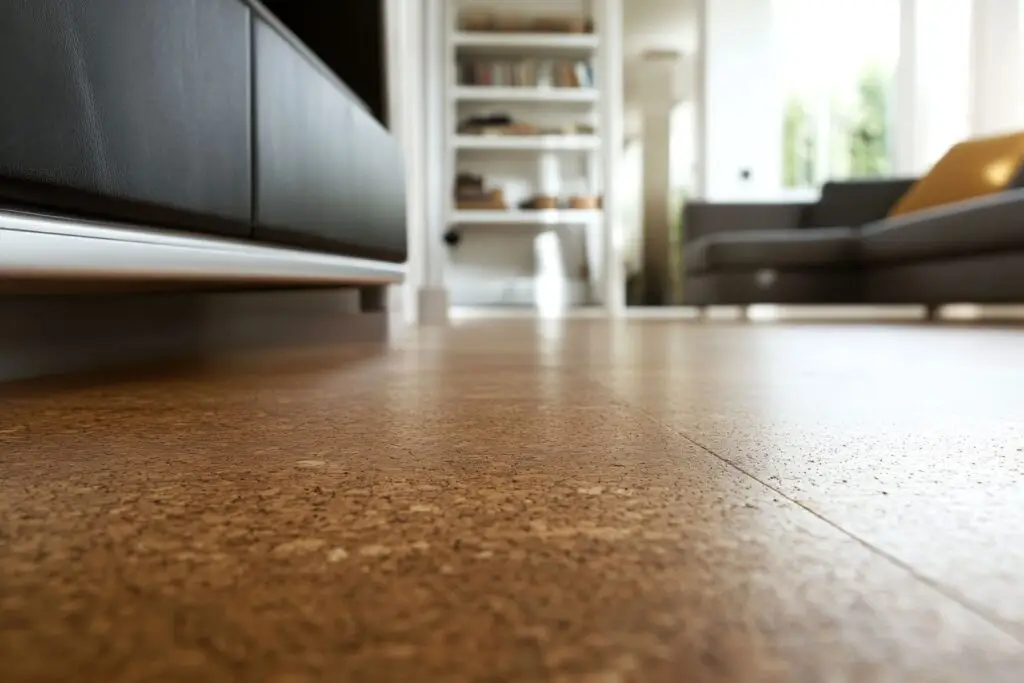
In the evolving world of US home improvement, cork-backed flooring has emerged as a premium alternative to traditional underlayments. Whether integrated into Luxury Vinyl Plank (LVP), engineered wood, or sold as high-density cork planks, this material offers a unique “honeycomb” cellular structure that provides natural benefits synthetic foams simply cannot replicate.
Quick Answer: Cork Backing Adds Cushion, Sound Reduction, and Insulation
Cork is harvested from the bark of the cork oak tree, making it a sustainable and rapidly renewable resource. When used as a flooring backer, it acts as a built-in underlayment.
- Natural Cushion: Cork contains millions of microscopic air pockets that compress and regrow, providing “memory” and significantly reducing foot fatigue.
- Acoustic Excellence: It is one of the most effective natural sound absorbers, effectively reducing both “impact noise” (footsteps) and “ambient noise” (voices/television) between floors.
- Thermal Barrier: Cork has a natural R-value that helps maintain floor temperature, making it feel warmer to the touch than stone or standard laminate.
Is Cork-Backed Flooring Waterproof?
This is the most common question American homeowners ask when shopping for new floors. The answer depends entirely on the core and the surface layer of the plank, not just the cork itself.
Water-resistant vs. Waterproof (What Homeowners Confuse)
It is vital to distinguish between the two:
- Water-resistant: Most cork-backed laminates or engineered woods are water-resistant. The surface can handle spills for a limited time (usually 24–72 hours), but if water reaches the cork backing through the joints, the cork can absorb moisture, leading to mold or structural failure.
- Waterproof: High-end SPC (Stone Plastic Composite) vinyl planks often come with a cork backing. In these products, the vinyl core is 100% waterproof. While the cork itself can get wet, it is naturally resistant to rot and mildew; however, “waterproof” usually refers to the floor’s ability to remain dimensionally stable, not the subfloor’s ability to stay dry.
Best Places to Use Cork-Backed Floors
Bedrooms and Living Rooms
Because of the added “give” and warmth, cork-backed flooring is an excellent choice for areas where family members spend time barefoot or playing on the floor. It mimics the comfort of carpet while maintaining the clean aesthetic of hard surfaces.
Condos and Multi-Family Housing (Sound Reduction)
Many Homeowners Associations (HOAs) in the United States have strict IIC (Impact Insulation Class) ratings for flooring installations in upstairs units. Cork-backed flooring is the “go-to” solution for condo owners because it often meets or exceeds these sound-dampening requirements without the need for additional, expensive rubber underlayments.
Common Problems (and How to Avoid Them)
Swelling from Standing Water
While cork is naturally antimicrobial, it is a cellular organic material. If a dishwasher leaks or a basement floods, water can get trapped between the cork and the subfloor.
- How to Avoid: In moisture-prone areas like kitchens or mudrooms, ensure the flooring has a high-quality “click-lock” system that creates a tight seal. For basements, always perform a calcium chloride moisture test on the concrete before installation.
Denting and Surface Wear
Because cork is soft, the planks—especially those with a thin wear layer—can be susceptible to heavy furniture or high-heeled shoes.
- How to Avoid: * Furniture Pads: Always use wide, felt furniture protectors under heavy sofas and tables to distribute weight.
- Wear Layer Choice: For high-traffic US households with pets or children, choose a product with at least a 20-mil wear layer on top of the cork-backed structure.
FAQs
Does cork backing work with radiant heat?
Yes, but with caveats. Cork is a natural insulator, meaning it can slow down the transfer of heat from the cables to the surface of the floor. If you are using electric radiant heat, ensure the total R-value of the floor doesn’t exceed the manufacturer’s recommendations (typically stay under R-2.5) to ensure the system remains efficient.
Do cork floors need sealing?
If you are installing “floating” LVP or laminate with a cork backing, no sealing is required. However, if you are installing traditional glue-down cork tiles, these must be sealed with a high-quality water-based polyurethane to protect the joints from moisture and dirt.
Upgrade Your Home with Santos Brothers Flooring
Choosing the right backing can be just as important as choosing the right color. At Santos Brothers Flooring, we help you navigate the technical details of sound ratings, moisture resistance, and subfloor preparation.
Experience the difference that professional installation and premium materials make. Contact Santos Brothers Flooring today for your expert consultation and quote!