In many American homes, traditional forced-air heating often leaves rooms feeling drafty with “hot spots” near vents and cold zones near windows. Radiant floor heating solves this by turning your entire floor into a heat source, providing a consistent, luxurious warmth that starts at your feet.
Quick Answer: Radiant Heating Warms From the Ground Up
Unlike traditional HVAC systems that heat the air (which quickly rises to the ceiling), radiant flooring uses thermal radiation. It warms the objects and people in the room directly. This creates a “heat envelope” where the air at floor level is the warmest, and the air at head level is slightly cooler—exactly how the human body prefers to stay comfortable.
The Two Main Types of Heated Floors
Electric Radiant Floors (Cables or Mats)
Electric systems are the most common choice for US residential retrofits and bathroom remodels.
- How it works: Thin electric heating cables are woven into a plastic mat or snapped into a de-coupling membrane (like Schluter-DITRA-HEAT) beneath the floor finish.
- Best for: Small-to-medium areas like bathrooms, kitchens, or mudrooms.
- Installation: Fast and minimally invasive. It doesn’t significantly raise the floor height.
Hydronic Radiant Floors (Water-Based Tubing)
Hydronic systems are the gold standard for whole-home heating, typically installed during new construction.
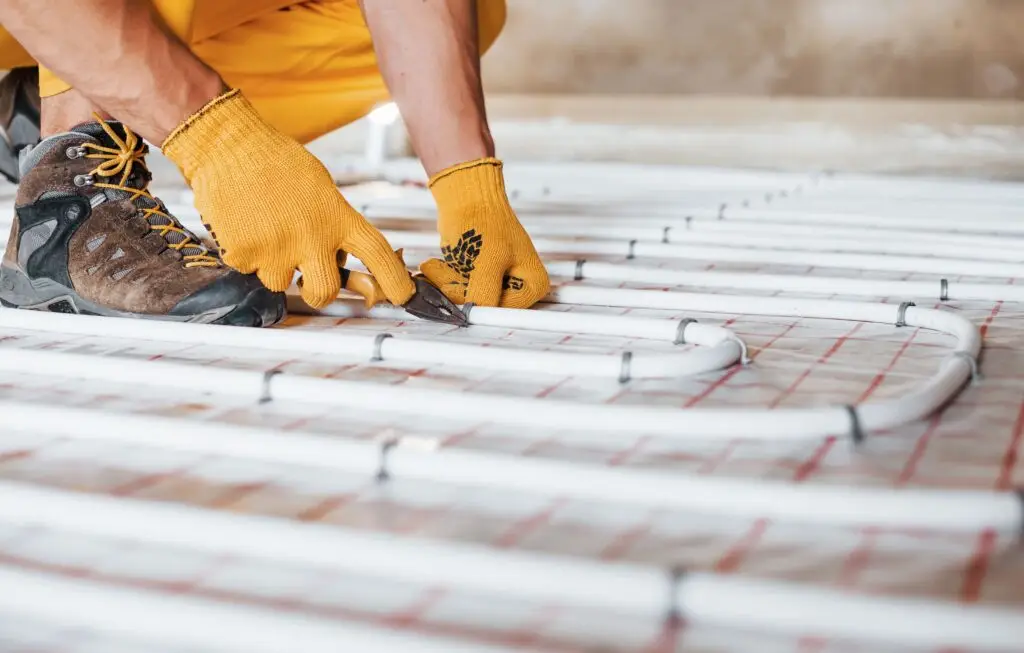
- How it works: A boiler or water heater pumps heated water through flexible PEX tubing laid in a pattern beneath the floor. This tubing is often embedded in a concrete slab or a thin layer of gypsum concrete (Gyp-Crete).
- Best for: Large floor plans, entire homes, or basements.
- Installation: Highly complex and requires professional plumbing and HVAC expertise.
What Flooring Works Best With Radiant Heat?
Not all flooring materials conduct heat equally. Choosing the right “finish” is critical for efficiency.
Tile and Stone (The Gold Standard)
Porcelain tile, ceramic, and natural stone have high thermal conductivity. They heat up quickly and hold onto that heat for a long time, making them the most efficient choice for radiant systems.
Engineered Wood
While solid hardwood can shrink or gap when exposed to direct heat, engineered wood is dimensionally stable. Its layered construction allows it to expand and contract less, making it a safe and popular choice for radiant heat, provided the floor temperature is kept below 80–82°F.
Luxury Vinyl (LVP/LVT)
Modern high-quality vinyl is compatible with radiant heat, but check the manufacturer’s specifications. Most vinyl floors have a maximum temperature limit; exceeding it can cause the planks to warp or off-gas.
Pros and Cons Homeowners Should Know
The Pros: Ultimate Comfort and Efficiency
- Silent Operation: No noisy blowers or clanking radiators.
- Allergy Friendly: Since there is no blowing air, radiant heat doesn’t circulate dust, dander, or allergens.
- Even Heat: No more cold spots; every inch of the floor is the same temperature.
The Cons: Complexity and Height
- Install Complexity: Adding radiant heat requires removing the existing floor down to the subfloor.
- Floor Height Changes: Hydronic systems, in particular, can add 1 to 2 inches to your floor height, which may require trimming doors or adjusting transitions to other rooms.
- Thermal Lag: These systems take longer to “warm up” than a furnace, so they are best used with consistent temperature settings rather than frequent adjustments.
FAQs
Are heated floors efficient?
Yes. Because radiant heat doesn’t lose energy through ductwork and warms the occupants directly, many homeowners find they can set their thermostat 2–4 degrees lower than usual while maintaining the same level of comfort, leading to lower monthly energy bills.
Do heated floors need special thermostats?
Yes. You cannot use a standard HVAC thermostat for floor heating. You need a dedicated radiant floor thermostat that includes a floor sensor. This sensor is installed beneath the flooring to monitor the actual temperature of the floor material, preventing it from overheating and protecting your floor warranty.
Warm Your Home with Santos Brothers Flooring
At Santos Brothers Flooring, we specialize in the precision installation required for radiant-ready floors. From selecting the right mortar to ensuring your engineered wood is rated for heat, we ensure your investment provides comfort for decades to come.
Ready for the luxury of warm floors? Contact Santos Brothers Flooring today for a professional consultation and a detailed estimate!