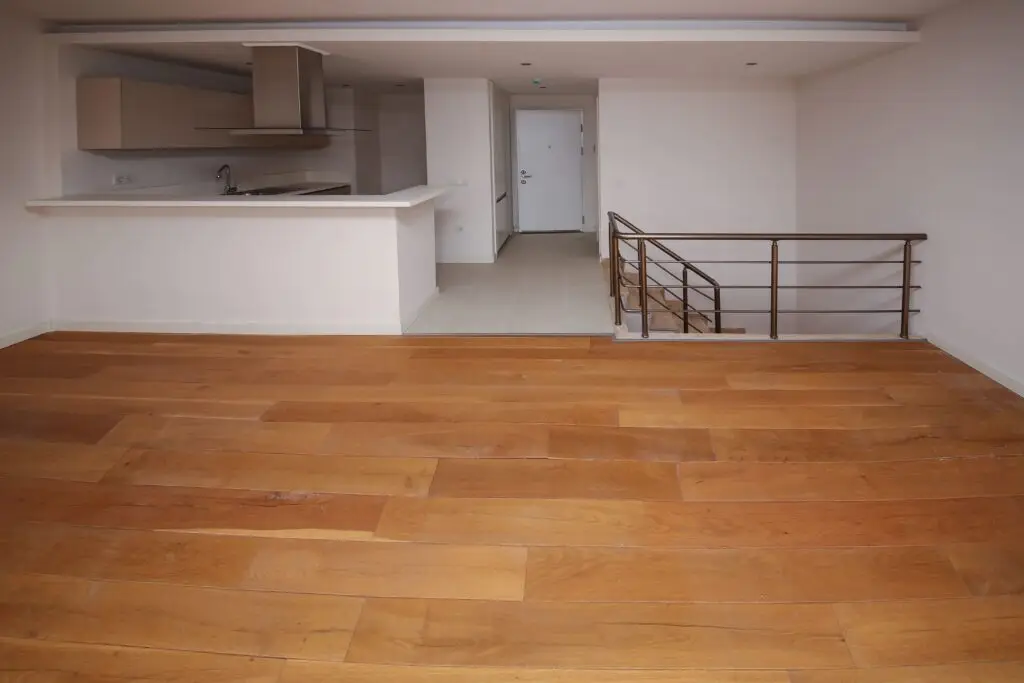
Solid hardwood remains the gold standard for residential flooring in the United States. Unlike composite or layered products, solid hardwood is milled from a single piece of timber, offering a level of authenticity, longevity, and structural integrity that other materials struggle to match.
Quick Answer: Solid Hardwood Is 100% Natural Wood and Highly Durable
Solid hardwood flooring consists of planks made entirely from a single species of wood—most commonly Red Oak, White Oak, Maple, Hickory, or Walnut. Because it is a natural organic material, it is incredibly durable and can last for over a century if properly maintained. Its primary hallmark is the ability to be sanded down and refinished multiple times, allowing homeowners to change the aesthetics of their home without replacing the floor.
Benefits of Solid Hardwood
Long Lifespan
While many flooring types have a 15-to-25-year lifecycle, solid hardwood is a multi-generational investment. It is common to find original solid oak floors in American homes built in the early 1900s that are still in excellent condition. With proper care, a 3/4-inch solid wood floor can easily last 80 to 100 years.
Multiple Refinishing Cycles
The most significant technical advantage of solid wood is the depth of the “wear layer.” Since the plank is solid wood from top to bottom (until the tongue-and-groove joinery), it can be sanded and refinished 5 to 7 times. This allows you to:
- Remove deep gouges and scratches.
- Change the stain color (e.g., from a 90s honey oak to a modern grey or espresso).
- Update the sheen from high-gloss to a trendy matte or satin finish.
Increases Home Value
Real estate data consistently shows that “true hardwood floors” are a top priority for US homebuyers. Unlike carpet or laminate, which are seen as depreciating assets, solid hardwood provides a high Return on Investment (ROI). It is often cited as a feature that helps homes sell faster and at a higher price point.
Limitations
Moisture Sensitivity
Because solid wood is porous, it reacts to humidity. High moisture levels cause wood to “cup” (edges rise) or “crown” (center rises). Consequently, solid hardwood is not recommended for basements or full bathrooms where standing water or high humidity is prevalent.
Expansion and Contraction
Wood is hygroscopic, meaning it absorbs and releases moisture based on the environment. In the winter (dry air), planks may shrink, leaving small gaps. In the summer (humid air), they expand. Professional installers leave “expansion gaps” around the perimeter of the room, hidden by baseboards, to allow the floor to breathe without buckling.
Best Rooms for Solid Hardwood
- Living and Dining Areas: Provides a high-end look for hosting.
- Bedrooms: Offers a warm, hypoallergenic surface (unlike carpets which trap dust).
- Home Offices: Withstands the weight of heavy furniture and rolling chairs (with a protective mat).
- Kitchens: Possible, but requires immediate cleanup of spills and high-quality polyurethane sealing.
Cost Per Square Foot in FL
In the Florida market, costs vary based on species and grade, but generally follow these averages:
- Materials: $5.00 – $12.00 per square foot.
- Labor (Installation): $4.00 – $8.00 per square foot.
- Total Estimated Cost: Expect to pay between $9.00 and $20.00 per square foot for a professionally installed, finished floor.
Note: Costs may increase for “site-finished” wood (sanded and stained in your home) compared to “pre-finished” planks.
FAQs
Is solid hardwood better than engineered?
“Better” depends on the application. Solid hardwood is better for longevity and refinishing potential. However, engineered wood is better for high-moisture areas or installation directly over concrete slabs (which is common in Florida).
How long does it last?
Standard 3/4″ solid hardwood typically lasts 100 years. Most homeowners only need to refinish every 15–20 years.
Does it scratch easily?
All wood can scratch. The “hardness” is measured by the Janka Scale. For example, Hickory is much harder and more scratch-resistant than Cherry. Using rugs in high-traffic areas and keeping pet nails trimmed are the best ways to prevent surface damage.
Professional Solid Hardwood Installation
Solid hardwood requires a specialized installation process that differs from “click-lock” floors. It must be stapled or nailed down to a wood subfloor. In regions with high humidity, like Florida, the wood must be “acclimated” to the home’s environment for 5–7 days before installation to prevent post-install warping.
Ready to Upgrade Your Home?
Don’t settle for imitations. Experience the timeless elegance and unmatched durability of genuine solid hardwood. Our expert team specializes in precision installation and custom finishing tailored to your home’s unique style.
Contact Santos Brothers Flooring Today for a Free In-Home Estimate!